
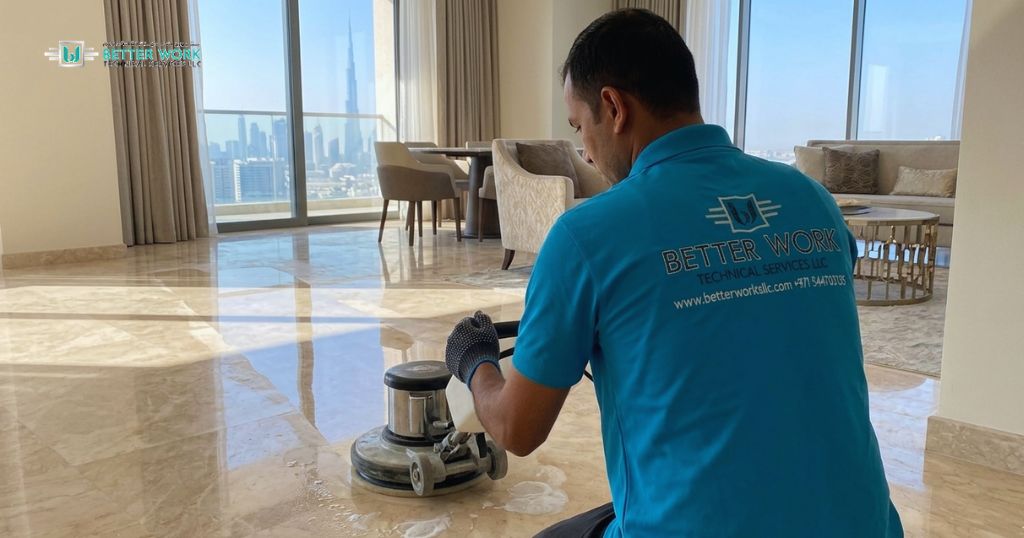
How Often Should Marble Floors Be Polished in Dubai’s Climate?
Marble floors are a popular choice in Dubai homes, hotels, and commercial buildings because they look elegant, bright, and premium. But Dubai’s climate is not gentle on marble. Heat, dust, sand, and frequent air-conditioning use slowly reduce the natural shine of marble surfaces.
This leads to a common question from homeowners and facility managers:
How often should marble floors be polished?
The answer depends on usage, location, and maintenance habits. In this guide, we will explain everything in a simple and practical way so you can protect your marble floors and avoid unnecessary damage or cost.
Why Marble Floors Lose Shine Faster in Dubai
Marble is a natural stone, and it reacts to its environment. In Dubai, there are a few specific factors that speed up wear and dullness.
The most common causes include:
- Fine desert dust acts like sandpaper underfoot.
- High foot traffic in homes, offices, and lobbies
- Air-conditioning dryness is affecting the surface texture.
- Spills from drinks, food, or cleaning chemicals
- Lack of regular sealing and maintenance
Over time, even high-quality marble starts to look dull or scratched if not maintained properly.
So, How Often Should Marble Floors Be Polished?
There is no single fixed answer, but in Dubai conditions, our professionals generally follow these guidelines:
Residential Homes
For villas and apartments with normal family use, marble floors should be polished every: 12 to 18 months
If the home has high foot traffic or pets, polishing may be needed more frequently.
Luxury Villas and High-End Properties
For premium homes in areas like Palm Jumeirah or Dubai Hills: Every 6 to 12 months
These properties often prioritize appearance, so maintenance is done more regularly.
Commercial Buildings and Offices
For offices, retail stores, and commercial spaces: Every 6 to 12 months, depending on traffic
Entrance areas and lobbies may need even more frequent polishing.
Hotels and High-Traffic Areas
For hotels, malls, and public spaces: Every 3 to 6 months
These areas experience constant foot traffic, so marble floor care is ongoing.
Signs That Your Marble Floor Needs Polishing
Instead of only following a schedule, it is important to recognize real signs of wear. Your marble likely needs polishing if you notice:
- Loss of shine or dull appearance
- Visible scratches on the surface
- Stains that do not come off with cleaning
- Uneven color or patchy areas
- Rough texture when walking barefoot
When these signs appear, waiting too long can make restoration more expensive.
Marble Floor Maintenance Between Polishing
Regular care can significantly delay the need for professional polishing. Simple habits make a big difference. Good marble floor maintenance includes:
- Cleaning dust daily with a soft mop
- Using pH-neutral cleaners (not harsh chemicals)
- Wiping spills immediately
- Avoiding abrasive scrubbing tools
- Placing mats at entrances to reduce sand and dust
These small steps help protect the surface and reduce long-term damage.
Why Dubai’s climate makes regular polishing important
Many people underestimate how much Dubai’s environment affects marble floors. The combination of:
- Constant sand particles
- High indoor activity
- Dry air from air-conditioning
- creates slow but continuous surface erosion.
Without proper marble polishing services, the surface loses its protective layer. Once that happens, stains and scratches become harder to remove.
Marble Polishing vs Marble Restoration: What’s the Difference?
Many property owners confuse polishing with restoration.
Marble Polishing
- Restores shine and smooth surfaces.
- Removes light scratches
- Maintains appearance
Marble Floor Restoration
- Deeper process
- Fixes cracks, stains, and heavy damage
- Includes grinding, polishing, and sealing
If your floor is only dull, polishing is enough. If damage is visible, marble floor restoration may be required.
Real Example from a Dubai Property
In a residential building in Al Barsha, residents complained that the lobby marble looked old and faded. The management initially assumed full restoration would be needed.
After inspection, it was found that the main issue was surface dullness caused by sand abrasion and lack of maintenance. The solution was professional polishing instead of full restoration.
After polishing, the floor regained its shine within a day, and the building avoided higher restoration costs and downtime.
This is a common situation in Dubai properties where a correct diagnosis saves both time and money.
Expert Recommendation for Dubai Property Owners
Based on real maintenance experience in Dubai, here is a practical guideline:
- Clean regularly to prevent the buildup of dust and sand.
- Schedule polishing once every 6–12 months for most properties.
- Do not wait until serious damage appears.
- Use professional marble polishing services instead of DIY methods.
Consistent care always costs less than major repairs later.
Conclusion: The Right Polishing Frequency
So, how often should marble floors be polished in Dubai?
In most cases, every 6 to 12 months is the ideal range. However, the exact timing depends on usage, location, and environmental exposure.
Dubai’s climate makes marble maintenance more important than in many other regions. Regular polishing not only keeps floors beautiful but also extends their lifespan and reduces long-term repair costs.
Still confusion about marble polishing? Contact Betterworkts LLC, for a free consultation!