
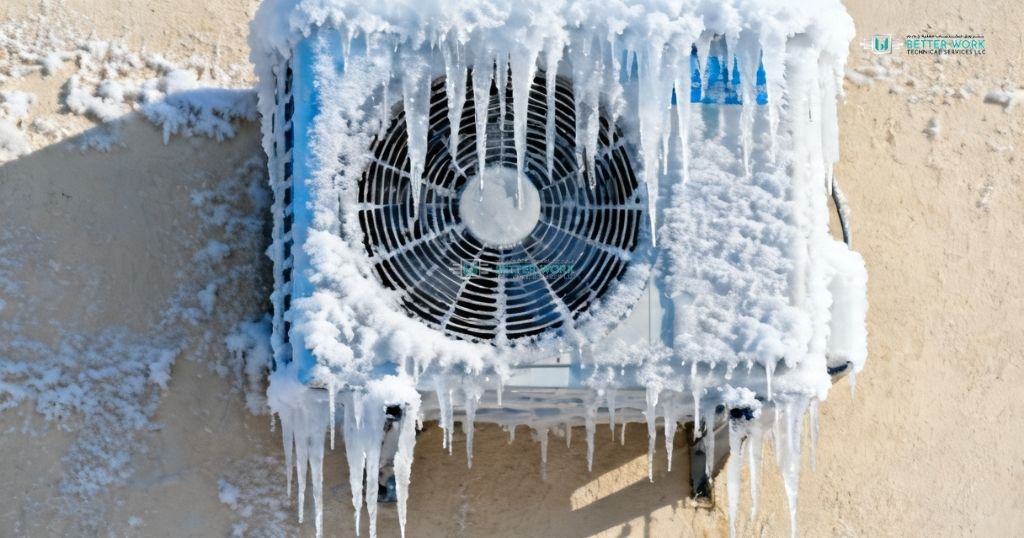
Why Ice forming in AC in Dubai? Causes and How to Fix
Ice forming on your AC unit during a Dubai summer is a mechanical cry for help. When dust-clogged filters or low refrigerant levels cause the evaporator coils to drop below freezing, moisture from the humid air turns into a “glacier” inside your unit.
Quick Fix Guide:
- Step 1: Switch to “Fan Only” mode immediately to melt the ice safely.
- Step 2: Check and wash your filters to restore airflow.
- Step 3: Clear any obstructions (curtains or furniture) from return air vents.
Comparison: Normal Operation vs. Frozen System
Use this table to identify if your system is struggling before the ice becomes visible.
Feature | Normal Operation | Frozen Unit Symptoms |
Airflow | Strong, consistent breeze | Weak or non-existent air from vents |
Indoor Temp | Reaches thermostat setting | Room stays warm despite AC running |
Sound | Consistent hum of the fan | Hissing (leak) or clicking (ice hitting fan) |
Visuals | Dry or slightly damp coils | Frost or ice buildup on copper pipes |
Drainage | Steady drip from the drain line | Excess water leaking from the indoor unit |
The “How” and “Why” of Frozen ACs
To fix the ice, you first have to understand why it’s there. Your AC uses an evaporator coil. This coil gets very cold, and as warm air from your room passes over it, it absorbs heat and moisture.
If something disrupts this process – like poor airflow or a refrigerant leak – the coil stays too cold. The moisture it pulls from the air doesn’t just drain away; it freezes instantly.
Top Causes: Why Ice is Forming in Your AC
In our experience servicing units across Dubai, the “ice age” in your living room usually boils down to three main culprits:
- Airflow Blockage (The Most Common Culprit)
If air can’t move over the coils, the cold stays trapped.
- Dirty Air Filters: Dubai’s dust and sand are relentless. If your filters are clogged, the air can’t get through, and the coil drops below freezing.
- Blocked Vents: Sometimes furniture or curtains accidentally block the return air vents.
- Dirty Evaporator Coils
Even if your filters are clean, the coils can still accumulate a layer of grime over time. This layer acts as an insulator, preventing the refrigerant in the coils from absorbing heat from your room.
- Low Refrigerant Levels
It sounds counterintuitive, but less “gas” actually leads to more ice. When refrigerant levels are low, the system pressure drops. This causes the remaining refrigerant to expand further and get much colder than it should, turning the coil into an ice maker.
- Faulty Fan Motors
If the indoor fan isn’t spinning fast enough (or at all), there’s no warm air moving to balance the temperature of the coils.
The “Middle of the Night” Freeze
One of our clients in Dubai Marina recently called us at 2:00 AM. They had set their AC to 18°C because it was a particularly humid night. By midnight, they woke up sweating because the unit had stopped blowing air. When they opened the front panel, it looked like a mini-glacier.
The cause? They hadn’t changed their filters in six months. The dust from a nearby construction site had completely choked the system. We had them turn it off to melt the ice, cleaned the filters, and it was back to normal by morning.
How to Stop Ice Forming in Your AC: A Step-by-Step Fix
If you see ice on your outside AC unit or frost on the inside air conditioner unit, follow these steps immediately:
Step 1: Turn it OFF
Do not keep the AC running. If you do, you risk burning out the compressor, which is a very expensive fix. Switch the system to “Fan Only” mode if possible; this helps melt the ice without running the cooling cycle.
Step 2: Check the Filters
Slide out your filters. If you can’t see light through them, they are too dirty. Wash them with lukewarm water, let them dry completely, and put them back.
Step 3: Inspect the Vents
Ensure no wardrobes, curtains, or boxes are blocking airflow in or out of the unit.
Step 4: Look for Leaks
Check the copper pipes leading to the outside AC unit. If you hear hissing or see oily spots, you likely have a refrigerant leak. Do not try to fix this yourself. Refrigerant is a chemical that requires professional handling.
Frequently Asked Questions (FAQs)
No, scraping can puncture the delicate refrigerant lines or bend the aluminum fins. The safest way to defrost it is to turn off the cooling and run the “Fan Only” mode to let the ice melt naturally.
Even in extreme heat, if air can’t flow over the coils because the filters are dirty, the temperature around them drops below freezing. This causes the moisture in the air to instantly turn into ice upon contact with the unit.
It’s not an immediate safety hazard, but it can destroy your compressor, which is the most expensive part to replace. Turn it off immediately to prevent permanent mechanical failure and a much higher repair bill.
Preventive Tips for Dubai Residents
- The 24°C Rule: In the peak of summer, try not to set your AC below 23°C or 24°C. Pushing it to 18°C during a heatwave puts the system under massive strain and increases the risk of freezing.
- Monthly Filter Rinse: Due to dust in the UAE, make it a habit to rinse your filters every 30 days.
- Professional Tune-ups: Have a technician check your gas levels and deep-clean the coils at least once a year.
Summary: When to Call the Pros?
If you’ve cleaned your filters and melted the ice, but the frost returns within a few hours, you have a mechanical issue. Whether it’s a leak or a failing motor, a quick professional check can save you from a total system breakdown during the hottest months of the year.
Call Betterworkts LLC to get quick help!